
Leave Your Message
Discover our cutting-edge applications of Microcrystalline Cellulose (MCC) tailored specifically for various plant-based protein extraction and stabilization scenarios.


The global shift towards plant-based diets has triggered a monumental transformation in the food and beverage industry. Consumers are increasingly seeking dairy alternatives driven by lactose intolerance, environmental consciousness, and evolving nutritional preferences. However, formulating plant-based protein beverages presents significant industrial challenges. Unlike traditional dairy milk, which contains naturally emulsified milk fats and casein micelles that provide a smooth texture, plant-based milks—derived from oats, almonds, soy, and peas—often suffer from inherent structural instabilities.
On an industrial scale, the primary hurdles include sedimentation of insoluble plant particles, phase separation, and a gritty or chalky mouthfeel. This is where Microcrystalline Cellulose (MCC) emerges as the ultimate technological equalizer. As a naturally derived, highly purified, partially depolymerized cellulose, MCC functions as an exceptional stabilizer and texturizing agent. The current commercial landscape dictates that clean-label, highly stable, and visually appealing plant-based milks dominate retail shelves. MCC allows manufacturers to achieve these exact parameters, ensuring that the beverage maintains a homogenous suspension throughout its shelf life, even after rigorous Ultra-High Temperature (UHT) processing.
Market trends indicate a compound annual growth rate (CAGR) of over 10% for plant milks globally. To capture this market, beverage conglomerates are heavily investing in advanced hydrocolloid systems. MCC, particularly when co-processed with carboxymethyl cellulose (CMC), forms an invisible, three-dimensional network within the liquid matrix. This thixotropic gel network traps plant proteins and minerals (like added calcium), preventing them from sinking to the bottom of the carton, thereby solving one of the most persistent consumer complaints: the need to aggressively shake the product before consumption.
Understanding the rheological and physicochemical impact of Microcrystalline Cellulose in complex beverage matrices.
Plant proteins are notorious for their large particle sizes and tendency to agglomerate. When MCC is dispersed in water under high shear, it forms an insoluble, microscopic cellulose network. This network acts as a physical barrier, suspending heavy particles such as cocoa powder, calcium carbonate, and insoluble plant fibers. It prevents serum separation (the watery layer at the top) and sedimentation, ensuring visual perfection in transparent packaging.
A major critique of vegan milk is its "watery" or "thin" texture. MCC mimics the rheological properties of milk fat. As the insoluble microcrystals glide across the palate, they create a sensation of creaminess and full-bodied richness without adding caloric value or unwanted fats. This is particularly crucial for "Barista Edition" plant milks, where a creamy mouthfeel is required to complement the acidity and bitterness of espresso.
Industrial beverage production relies heavily on UHT treatment to extend shelf life. Many traditional thickeners degrade, lose viscosity, or gel excessively under high heat. MCC is remarkably heat-stable. Furthermore, in slightly acidic environments (like fruit-flavored protein drinks or fermented plant yogurts), MCC maintains its structural integrity, preventing the protein precipitation and curdling that typically plagues acidic plant-based formulations.
The versatility of MCC extends across various specific plant-based categories. In Oat Milk, which naturally contains starches that can become slimy upon heating, MCC provides clean viscosity and masks starchiness. In Almond Milk, which has very low natural protein and fat content, MCC builds the entire body of the beverage, transforming flavored water into a milk-like substance. For Pea Protein Beverages, which are highly nutritious but often suffer from a strong "beany" off-note and powdery texture, MCC encapsulates the particles, significantly reducing the perception of grittiness and masking off-flavors.
Furthermore, in the booming sector of Plant-Based RTD (Ready-To-Drink) Coffees and Lattes, MCC ensures that the plant milk does not feather or separate when introduced to the high acidity and temperature of coffee. The thixotropic nature of MCC means it thins out during swallowing (providing a refreshing finish) but recovers its viscosity at rest, keeping the beverage perfectly stable on the supermarket shelf for up to 12 months.
Nanchang Tellcan food Science Co., Ltd (hereinafter referred to as Tellcan Food), founded in 2001, is an excellent practitioner of compound food additives and food essence, specializing in the research and development, production and sales of food additives, and the research and development of food technology and food technology. Various types of compound food additives, edible essence and spices produced by Tellcan Food can be used in many fields such as food, beverage and dairy products.
As the plant-based beverage sector scales globally, supply chain reliability becomes paramount. Tellcan’s robust infrastructure allows us to meet the rigorous demands of international beverage brands, providing consistent, high-quality Microcrystalline Cellulose solutions that define the future of food technology.
Read more
The future of Microcrystalline Cellulose in plant-based beverages is intertwined with advancements in biotechnology and AI-driven formulation. We are observing a trend towards nano-fibrillated cellulose, which offers even greater surface area and stabilizing power at significantly lower dosage levels. This aligns perfectly with the consumer demand for "cleaner" labels with fewer ingredients.
Additionally, sustainable sourcing of raw cellulose is becoming a critical industrial metric. The transition from traditional wood pulp to upcycled agricultural waste (such as oat hulls or fruit pomace) to produce MCC represents the next frontier in circular economy food science. Tellcan Science is at the forefront of these developments, utilizing predictive algorithms to custom-design MCC particle sizes that perfectly match the specific density of novel plant proteins like duckweed, chickpea, and hemp.
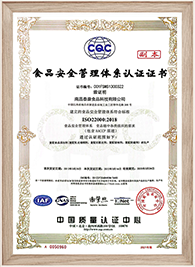
The company has implemented and maintains the HACCP 22000 Food Safety Management System, ensuring reliable products and services. To date, Tellcan has resolved technical challenges for thousands of domestic enterprises and earned prestigious recognitions, including:
 Council Member of China Food Additives Production and Application Industry AssociationStanding Council Member of Jiangxi Food Additives AssociationMember of China Dairy Products Industry AssociationMember of China Bakery & Confectionery Supplementary Materials Industry AssociationMember of China National Federation of Industry & Commerce Bakery AssociationPremium Products & Global Sourcing



A showcase of our collaborative successes in integrating Microcrystalline Cellulose into large-scale, commercially viable plant-based protein drink formulations worldwide.


